Amsterdam City Guide
Amsterdam City Guide: Canal Living, Neighborhood Rhythm, and Where to Stay
Amsterdam works best when the stay is built around neighborhood rhythm rather than landmarks alone. Canals, cycling, cafés, museums, and compact daily movement give the city a strong premium feel for both short breaks and longer stays.
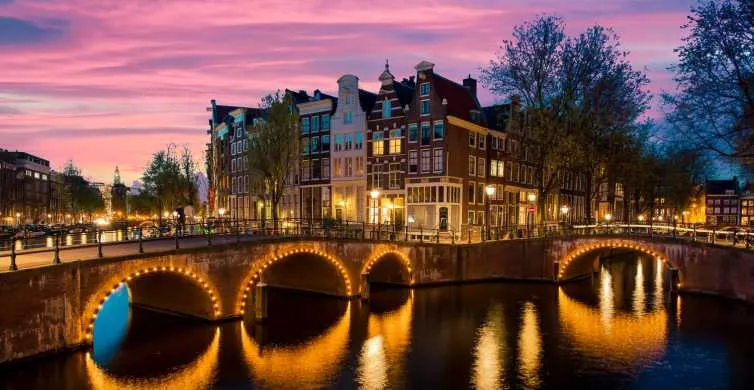
Why Stay in Amsterdam
Amsterdam delivers one of Europe's most coherent city-stay experiences. Distances are manageable, neighborhoods are distinctive without feeling disconnected, and daily life is shaped by canals, bikes, cafés, and culture rather than heavy logistics.
That makes it especially strong for couples, first-time visitors who want quality over scale, business travelers who value efficient movement, and longer-stay guests who want a city that is easy to inhabit.
Amsterdam Culture and Lifestyle
Amsterdam is defined by canal houses, design-conscious public life, museums, markets, and a city rhythm that feels both international and local. The atmosphere is rarely formal in a Paris sense, but it is highly curated in everyday quality.
I amsterdam frames the city through different stay styles and neighborhoods, which fits the reality well: canal belt elegance, Jordaan character, museum access, and residential calm all create different versions of the same city.
Canal-city identity
Water, bridges, and narrow streets shape both the visual character and the pace of the stay.
Creative and polished
Amsterdam blends major museums and historic architecture with design shops, coffee culture, and relaxed urban confidence.
Daily ease
The city feels premium partly because movement is simple and neighborhood quality is consistently high.
Best Neighborhoods in Amsterdam
In Amsterdam, micro-location matters. A stay on or near the canals feels very different from one chosen mainly for price, even when the distances are short.
For first-time visitors
The canal belt and nearby central districts offer the easiest balance of atmosphere, walkability, and landmark access.
For classic Amsterdam feel
Jordaan and surrounding canal streets remain the strongest match for guests who want character and local dining.
For museum access and polish
The Museum Quarter and adjacent southern central areas suit guests who want a more refined and orderly base.
For longer stays
Residential but well-connected districts often create a better routine than staying in the busiest visitor core.
Real Estate and Staying Options
Amsterdam apartment value is shaped by canal position, neighborhood quality, natural light, building character, and how easy the apartment makes daily movement. In older buildings, charm can be very high, but layout efficiency becomes especially important for longer stays.
For short stays, centrality and canal-side atmosphere often justify the premium. For monthly stays, the better choice can be a calmer neighborhood with strong tram or bike access and more practical interior space.
- Canal-side position adds atmosphere, but not every trip needs the busiest central address.
- Older Amsterdam buildings can be beautiful, but layout and stair access still matter.
- For longer stays, neighborhood livability usually matters more than pure postcard value.
Cost of Living in Amsterdam
As of March 11, 2026, Amsterdam remains one of Europe's more expensive city markets, especially in housing. The premium reflects demand, compactness, and the strength of the city's central districts.
Recent city benchmarks point to roughly EUR 2,246 per month for a one-bedroom in the city center, about EUR 1,635 outside the center, an inexpensive restaurant meal around EUR 20, and a cappuccino around EUR 4.06. Furnished short and monthly stays in stronger canal or central neighborhoods often sit above those residential averages.
Dining
Everyday dining is not cheap, but the city rewards spending with strong quality and consistency.
Transport
Transport is efficient, though many guests rely as much on walking and bikes as on paid transit.
Housing
Housing is the main premium category, especially for central canal-side or design-led furnished stays.
Top Things to Do
Canal walks, museums, neighborhood cafés, markets, ferry crossings, and park time all belong to a strong Amsterdam stay. The city works best when guests balance major sites with ordinary neighborhood time.
For longer stays, Amsterdam becomes less about checklists and more about local routine, especially in districts where cafés, groceries, and tram links are already close by.
Public Transport in Amsterdam
Amsterdam is highly manageable without a car. Trams, metros, buses, ferries, walking, and biking cover most needs, and the city is strongest when guests embrace that pattern instead of trying to move through it like a car city.
GVB lists a 1-hour ticket at EUR 3.40 for 2026 and a day ticket at EUR 10, with multi-day options up to 7 days. That makes transit straightforward, but in many central neighborhoods walking and short tram rides are enough.
- A car is usually unnecessary and often inconvenient in Amsterdam.
- Central districts reward walking and short tram use rather than long daily commutes.
- Bike-friendly neighborhoods can improve the quality of a longer stay significantly.
Who Should Stay in Amsterdam
Couples
Excellent fit thanks to canal atmosphere, dining, museums, and compact romantic scale.
Culture travelers
Very strong option for guests who want museums and architecture without heavy city friction.
Business travelers
Works well when the apartment is chosen for efficient movement and a calmer evening routine.
Longer-stay guests
A very good choice for visitors who want an easy daily city life with consistent quality.
Local Tips for a Better Stay
- Choose neighborhood quality before chasing the absolute lowest rate.
- For first visits, staying near the canals usually improves the whole experience.
- For monthly stays, prioritize light, layout, and easy tram or bike access.
- Amsterdam is best experienced through daily rhythm, not only through museum planning.
FAQs About Staying in Amsterdam
Which area is best to stay in Amsterdam?
For many guests, the canal belt and nearby central neighborhoods are the strongest all-round choice.
Is Amsterdam expensive?
Yes. Amsterdam is one of the more expensive European city markets, especially for housing.
Is public transport good in Amsterdam?
Yes. Amsterdam has strong tram, metro, bus, and ferry coverage, though many stays also rely heavily on walking and biking.
Is Amsterdam good for a monthly stay?
Yes, especially if the apartment supports routine and is in a neighborhood that works well day to day.
What matters most in an Amsterdam apartment?
Neighborhood fit, natural light, practical layout, and how easily the apartment connects to daily movement.
Featured Apartments in Amsterdam
Selected stays that match the city guide, from central bases to longer-stay options.
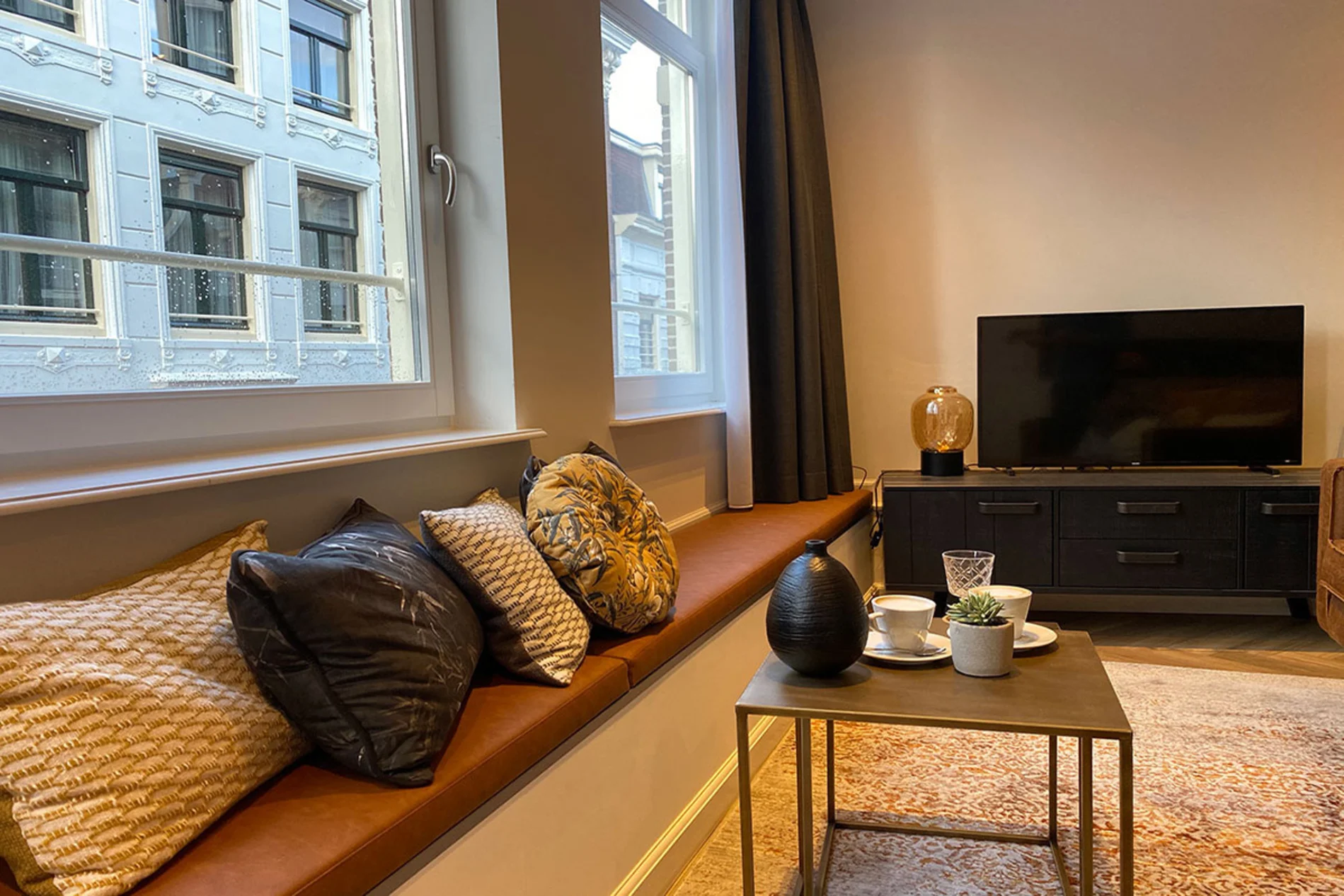 AMS-6578
Luxury Apartment on The Damrak
€160.00/Night
€2,690.00/Month
View details
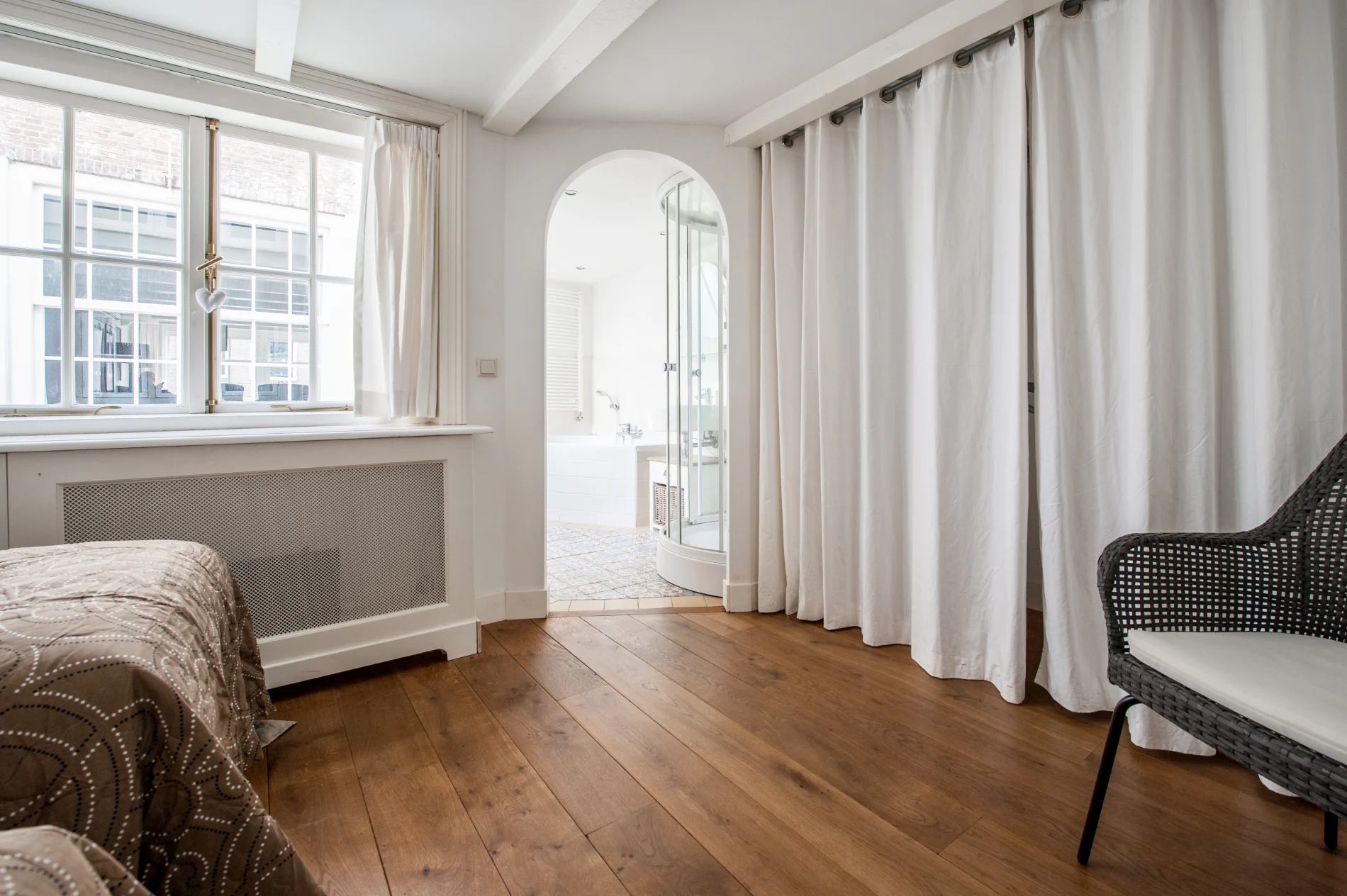 AMS-4390
Apartment in the Heart of the Jordaan
€160.00/Night
€2,430.00/Month
View details
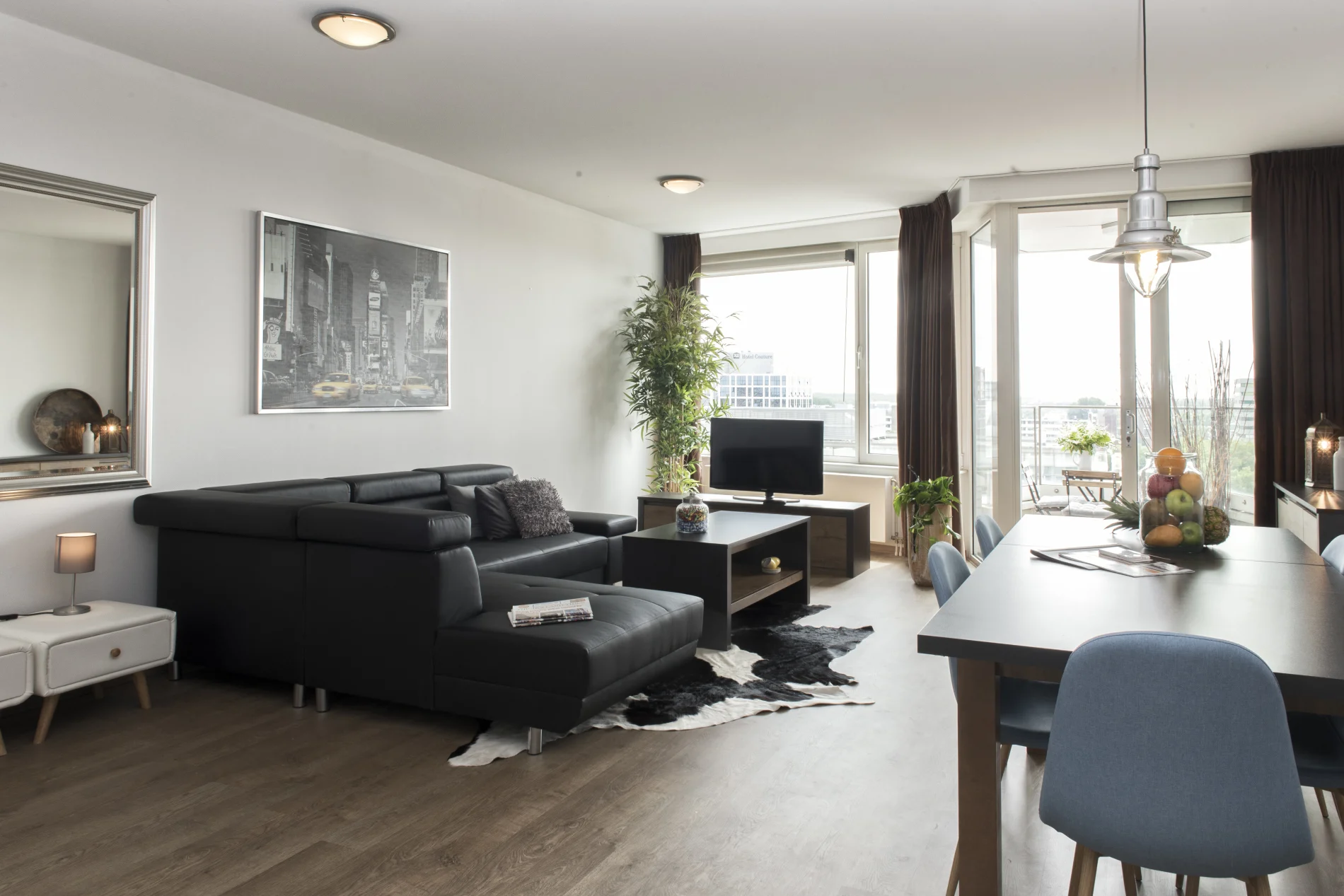 AMS-9070
Modern Two Bedroom Apartment
€185.00/Night
€2,830.00/Month
View details
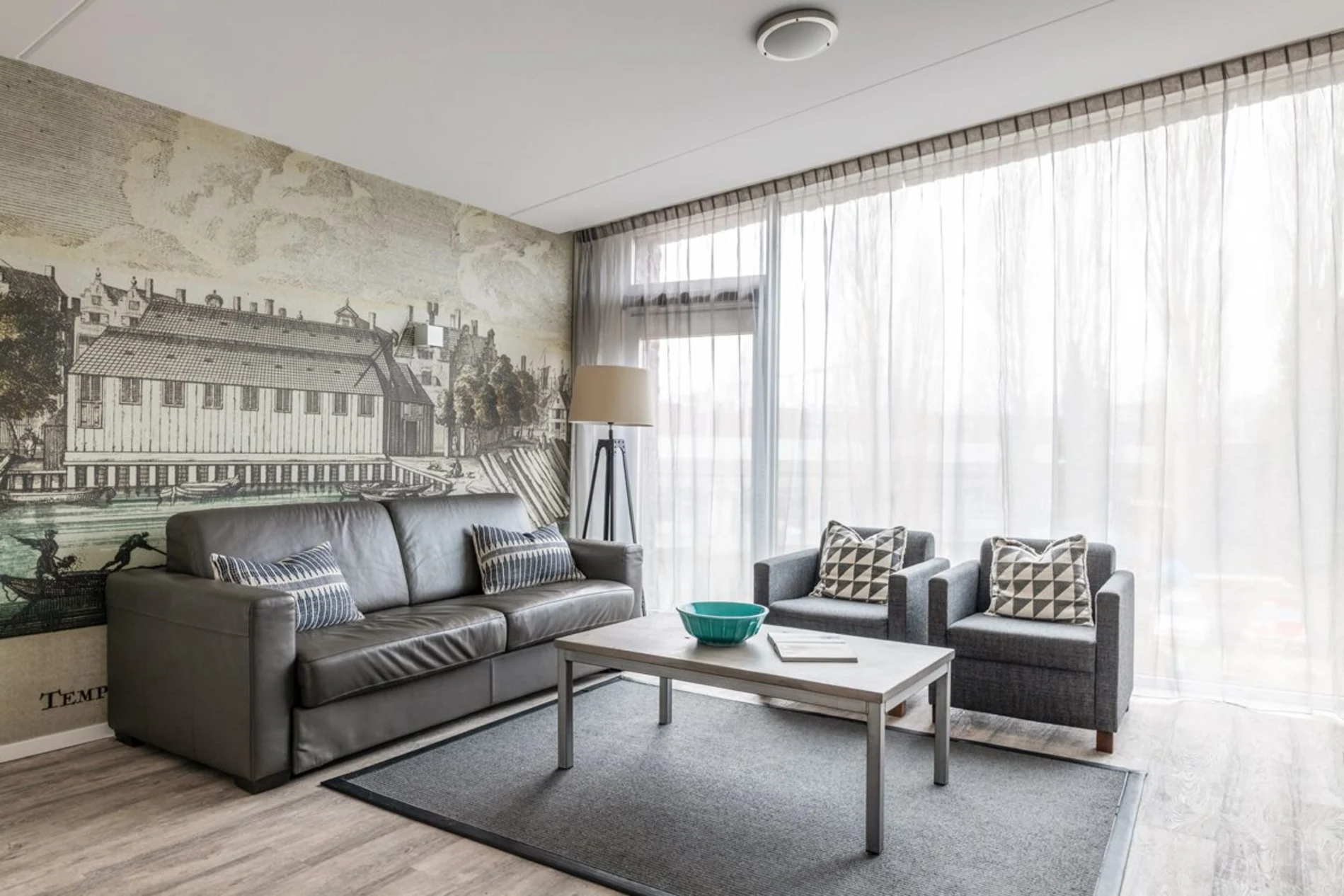 AMS-5577
Two Bedroom Apartment Family
€185.00/Night
€3,830.00/Month
View details