London City Guide
London City Guide: Neighborhood Choice, Daily Ease, and Where to Stay
London is less about one single center and more about choosing the right district for the trip. It remains one of Europe's strongest cities for culture, business, dining, parks, and neighborhood variety, but the apartment location shapes the stay more here than in almost any other major capital.

Why Stay in London
London is one of the few cities where a stay can be built equally well around museums, business, restaurants, parks, theater, shopping, and distinct local neighborhoods. Its scale can look intimidating, but it becomes highly manageable when the district is chosen well.
That makes London especially attractive for guests who want range and flexibility. It works for short premium city breaks, business travel, family trips, and longer stays where daily routine matters just as much as access to headline attractions.
London Culture and Lifestyle
London is defined by variety. Visit London groups the city into central, north, south, east, and west areas, each with distinct local identities ranging from Covent Garden and South Kensington to Shoreditch, Brixton, and Greenwich.
The city is also unusually balanced: museums, food, parks, business districts, and local markets coexist without one theme overwhelming the stay. That makes London feel both global and highly neighborhood-based.
Cultural depth
Major museums, theater, music, design, and historic landmarks give London year-round cultural strength.
Neighborhood variety
Few cities offer such different district identities within the same trip, from Shoreditch and Clerkenwell to South Kensington and Notting Hill.
Daily rhythm
The city moves fast, but each district sets its own tone, which is why local fit matters more than general city branding.
Best Neighborhoods in London
London is the clearest example in Europe of district first, city second. Choosing the wrong area can make the city feel exhausting, while the right one makes it remarkably smooth.
For first-time visitors
Central London districts such as Covent Garden, the South Bank, and nearby well-connected areas work best for a first stay.
For premium feel
South Kensington, Mayfair, Notting Hill, and selected west or central areas suit guests who want a more polished residential atmosphere.
For creative energy
Shoreditch, Hoxton, Clerkenwell, and parts of East London appeal to guests who want restaurants, galleries, and stronger local scene culture.
For families or longer stays
Calmer residential districts with strong Tube links often outperform the busiest core over time.
Real Estate and Staying Options
London apartment value depends heavily on exact location, transport access, and whether the district suits the purpose of the stay. In many cases, one Tube line and one neighborhood shift can change the quality of the whole experience.
For short stays, centrality and direct transport access are often the strongest priorities. For monthly stays, layout, storage, noise level, and neighborhood services usually matter more than being in the most visible postcode.
- Tube access is one of the biggest real value drivers in a London stay.
- Premium districts offer atmosphere and convenience, but not every trip needs the highest-profile postcode.
- For monthly stays, neighborhood routine often matters more than tourism proximity.
Cost of Living in London
As of March 9, 2026, London remains one of Europe's most expensive urban markets, especially for housing and transport. The city rewards quality and convenience, but those benefits are reflected clearly in pricing.
Recent city benchmarks point to roughly GBP 2,367 per month for a one-bedroom in the city center, about GBP 1,757 outside the center, an inexpensive restaurant meal around GBP 20, a cappuccino around GBP 3.99, and a monthly public transport pass around GBP 200. Furnished short and monthly stays can rise well above these averages in prime districts.
Dining
London has extraordinary food range, but daily costs are high even by major-capital standards.
Transport
Transport is expensive, but the network quality is one of the reasons so many neighborhoods remain viable for visitors.
Housing
District choice, transport access, and premium furnished quality define most of the pricing difference.
Top Things to Do
London can be built around museums, theater, markets, parks, shopping, riverside walks, and district exploration as much as around the obvious landmarks. The city is rarely at its best when treated as a checklist alone.
For longer stays, the strongest value often comes from combining one or two headline attractions with a district-led routine.
Public Transport in London
London is highly usable without a car. TfL recommends contactless or Oyster pay as you go as the easiest option for visitors, with daily and weekly capping built in.
For 2026, TfL lists a Zones 1 to 2 daily cap of GBP 8.90, a bus and tram Hopper fare of GBP 1.75, and sample Zones 1 to 2 pay as you go fares at GBP 3.50 peak and GBP 2.90 off-peak. That makes district choice especially important because better local positioning reduces both cost and time.
- Contactless pay as you go is usually the simplest option for visitors.
- A well-placed apartment can save a surprising amount of travel time in London.
- A car is usually a disadvantage for central and inner London stays.
Who Should Stay in London
Business travelers
One of Europe's strongest choices thanks to airport links, district variety, and professional infrastructure.
Couples
Excellent fit for food, culture, parks, theater, and premium neighborhood stays.
Families
Works well with the right apartment size and a district that reduces daily travel friction.
Longer-stay guests
Very good when neighborhood fit is right and the apartment supports a daily city routine rather than tourism alone.
Local Tips for a Better Stay
- Choose the district before you choose the apartment style.
- Do not optimize only for rent; optimize for time, transport, and routine.
- For a first visit, central or highly connected districts are usually worth it.
- For monthly stays, prioritize noise level, storage, and nearby daily services.
FAQs About Staying in London
Which area is best to stay in London?
There is no single best area. The right district depends on the trip, but highly connected central or premium residential neighborhoods are usually the strongest starting point.
Is London expensive?
Yes. London remains one of the most expensive city markets in Europe, especially in housing and transport.
Is public transport good in London?
Yes. It is one of the city's defining strengths and makes a wide range of neighborhoods workable without a car.
Is London good for a monthly stay?
Yes, especially when the district fits the routine and the apartment reduces travel friction.
What matters most in a London apartment?
District fit, Tube access, building calm, and whether the apartment supports the exact purpose of the trip.
Featured Apartments in London
Selected stays that match the city guide, from central bases to longer-stay options.
 LDN-1001
Elegant 2-Bedroom Period Apartment near Seven Dials and Covent Garden
€230.00/Night
€4,830.00/Month
View details
 LDN-7978
Elegant Split-Level 1-Bedroom Residence in South Kensington
€175.00/Night
€3,460.00/Month
View details
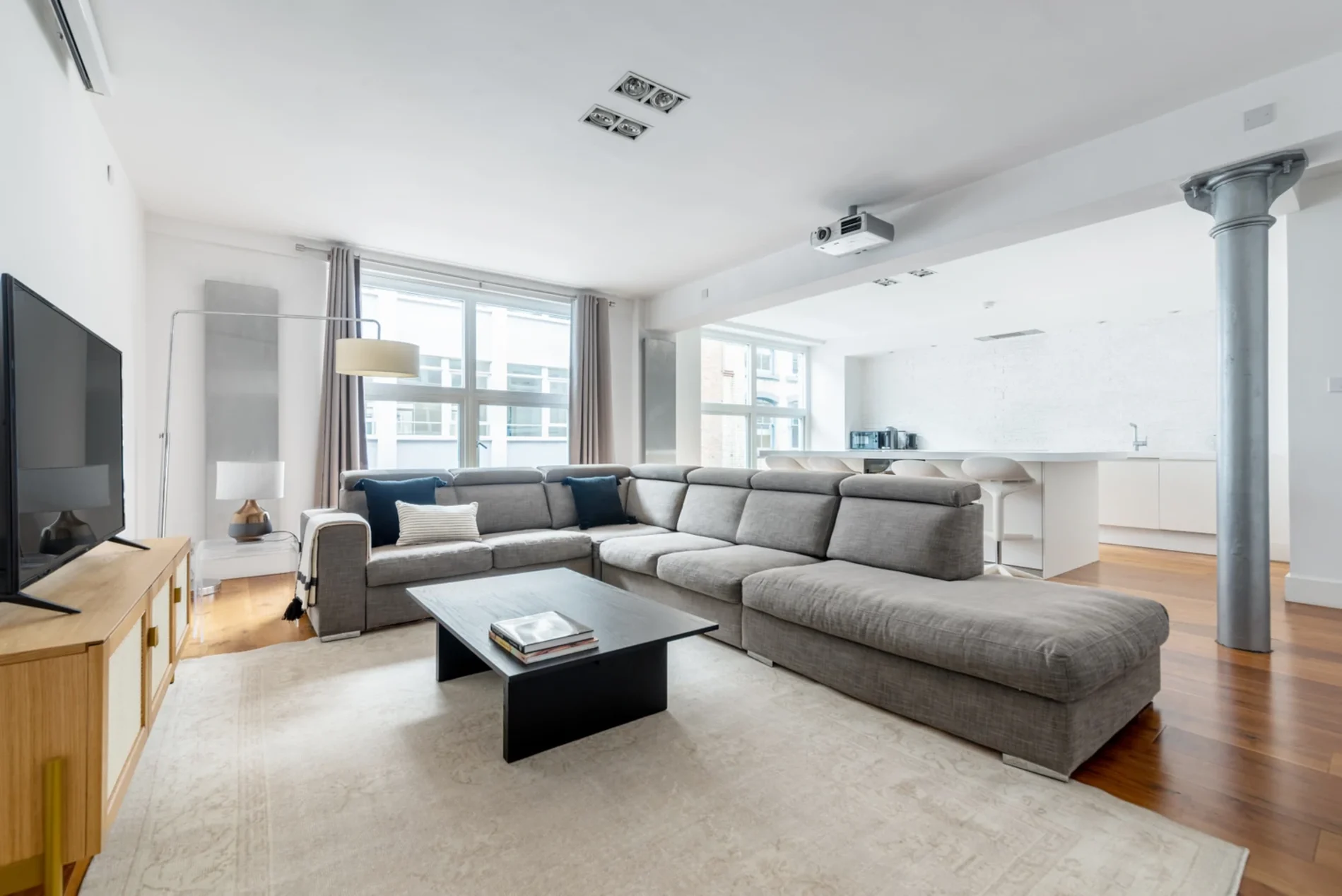 LDN-2030
Stylish 2-Bedroom Residence with Two Bathrooms in Historic Clerkenwell
€185.00/Night
€3,730.00/Month
View details
 LDN-2001
6 Bedroom Penthouse in Mayfair
€780.00/Night
Not Available
View details