Strasbourg City Guide
Strasbourg City Guide: Historic Quarters, Canal Living, and Where to Stay
Strasbourg offers a distinctive city stay shaped by canals, half-timbered streets, imperial architecture, and a rare French-German cultural blend. It is especially attractive for guests who want walkable scale, strong local character, and a city that feels historic without becoming difficult to inhabit.
Why Stay in Strasbourg
Strasbourg is one of the easiest heritage cities in France to actually live in for a short or medium stay. Its scale is manageable, the old center remains highly walkable, and the city still supports everyday routines without feeling built only for visitors.
That makes it a strong fit for cultural breaks, romantic trips, and longer stays where neighborhood character and transport simplicity matter more than big-city spectacle.
Strasbourg Culture and Lifestyle
Visit Strasbourg describes the city as shaped by both French and German influences, and that dual identity is visible everywhere: architecture, food, language traces, urban planning, and public space. Grande Île and the Neustadt district both carry UNESCO recognition.
Strasbourg feels slower than Paris and more intimate than many regional capitals. Canals, half-timbered houses, tram routes, and market culture define the rhythm of the stay.
Historic identity
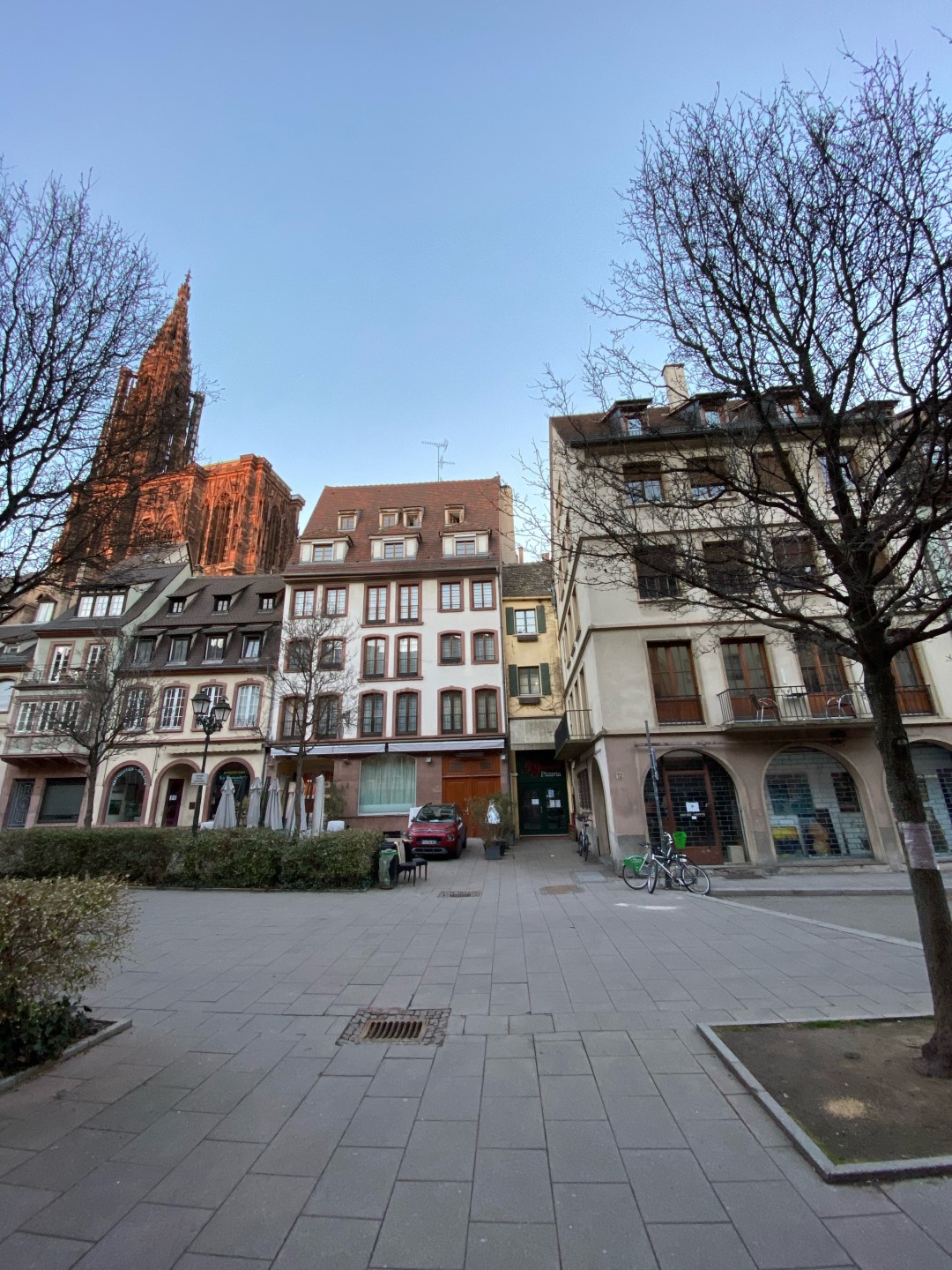
Grande Île, Petite France, cathedral routes, and old streets give Strasbourg one of France's strongest small-city heritage settings.
Cross-border character
French and German cultural overlap gives the city a distinct texture that is not interchangeable with other French destinations.
Daily rhythm
The city feels calm, local, and easy to inhabit, especially in comparison with larger capitals.
Best Neighborhoods in Strasbourg
Visit Strasbourg presents distinct quarters including the city centre, Petite France, Krutenau, and Neustadt. In Strasbourg, these differences are not subtle; they shape how romantic, lively, or calm the stay feels.
For first-time visitors
The city center on Grande Île is the easiest and most atmospheric first base.
For postcard Strasbourg
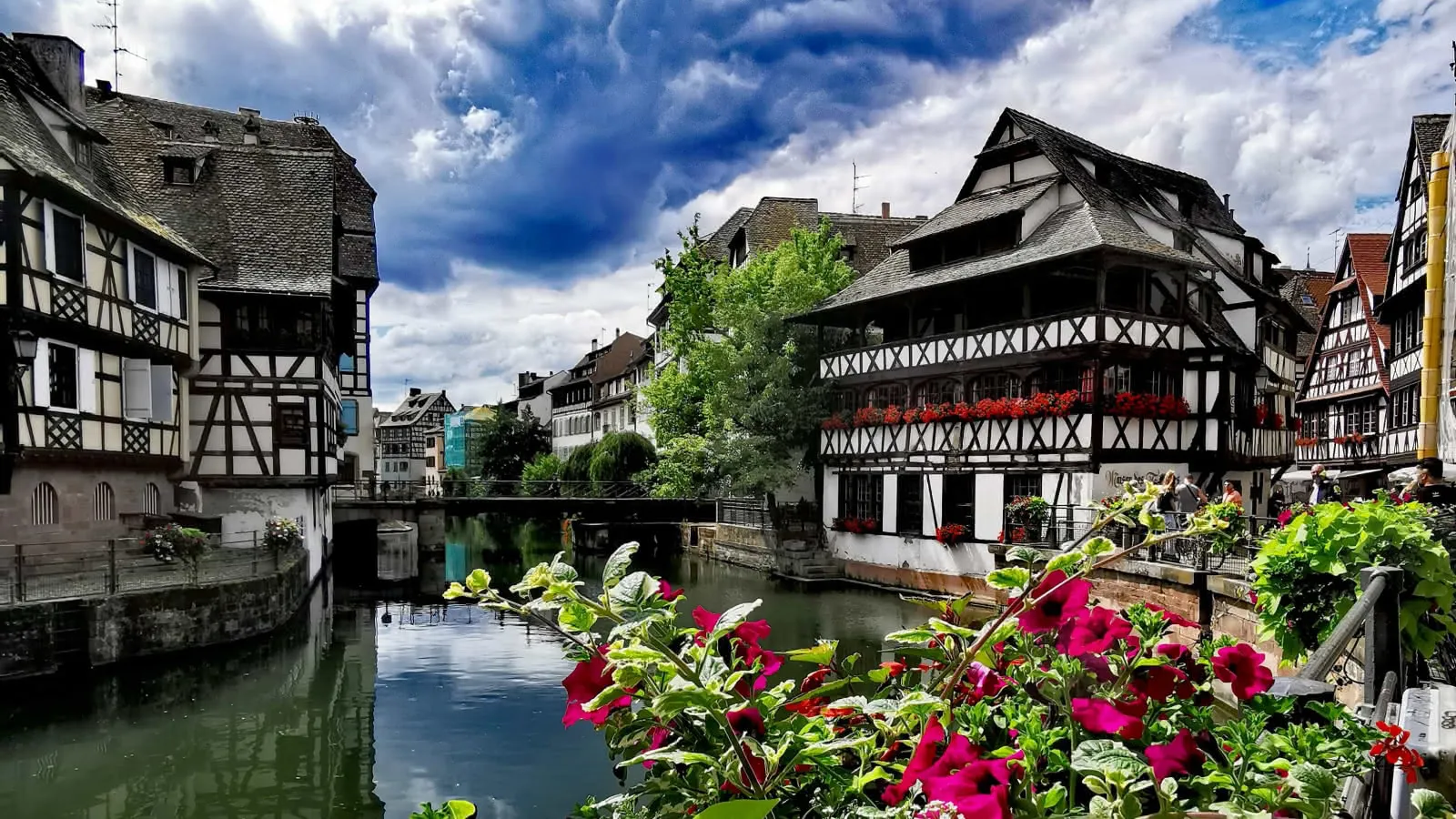
Petite France remains the most emblematic and romantic district, especially for shorter stays.
For livelier local atmosphere
Krutenau offers a more youthful and nightlife-oriented feel without losing central access.
For architectural depth and calmer streets
Neustadt suits guests who want wider streets, strong heritage, and a more residential daily rhythm.
Real Estate and Staying Options
Strasbourg apartment value often comes from exact quarter, canal proximity, historic character, and whether the apartment supports easy movement through the center. In a compact city like this, micro-location still matters, but in a more manageable way than in Paris.
For short stays, being close to the historic core is usually the strongest choice. For monthly stays, a district such as Neustadt or another tram-connected residential area can offer a better long-term balance.
- Historic-center stays are ideal for atmosphere and walking access.
- Canal-side context and authentic building character carry real value in Strasbourg.
- For longer stays, calmer tram-connected quarters often create the better routine.
Cost of Living in Strasbourg
As of February 8, 2026, Strasbourg remains more accessible than Paris and Nice in housing, while still offering strong quality of life and a rich historic setting.
Recent city benchmarks point to roughly EUR 826 per month for a one-bedroom in the city center, about EUR 633 outside the center, an inexpensive restaurant meal around EUR 15, a cappuccino around EUR 3.57, and a one-way local transport ticket around EUR 1.90. Furnished short and monthly stays in the best quarters will usually sit above those residential averages.
Dining
Strasbourg is moderate by French city standards, especially once you move away from the most visitor-heavy spots.
Transport
Transport value is strong because the city is compact and tram coverage is effective.
Housing
Historic-center positioning and apartment character matter more than abstract prestige.
Top Things to Do
The cathedral, Petite France, Grande Île, Neustadt, canal walks, and market streets define the classic Strasbourg stay. The city also lends itself well to slower, district-based exploration without needing an overloaded itinerary.
For longer stays, the combination of heritage, bike culture, and manageable scale becomes a major advantage.
Public Transport in Strasbourg
Strasbourg is highly manageable without a car. Trams, buses, and cycling support most daily movement, and the city center itself is largely walkable.
CTS lists a single ticket at EUR 1.90 when bought via app, card, or contactless ticket, valid for one hour with or without transfers, and also lists a 24H Solo pass from EUR 4.60 and a 72H Solo pass from EUR 10.20. That makes Strasbourg one of the easier French cities to navigate as a visitor.
- The tram network makes both central and slightly outer districts practical.
- Walking covers much of the historic core.
- A car is usually unnecessary and often less convenient than tram plus walking.
Who Should Stay in Strasbourg
Couples
Excellent fit for romantic and slower cultural trips thanks to canals, heritage, and compact scale.
Culture travelers
Very strong choice because the city offers heritage, architecture, museums, and district texture in a highly manageable format.
Longer-stay guests
A good option for guests who want a calm French city with easy daily life and strong transport.
Travelers who prefer smaller elegant cities
Strasbourg is ideal for people who want depth and charm without the scale of Paris.
Local Tips for a Better Stay
- For first visits, staying on or near Grande Île usually gives the strongest experience.
- Petite France is beautiful, but some longer stays may work better in slightly calmer nearby quarters.
- Krutenau is a strong option when local energy matters more than postcard quiet.
- Strasbourg rewards guests who mix walking with tram rather than trying to treat it as a car city.
FAQs About Staying in Strasbourg
Which area is best to stay in Strasbourg?
For many guests, Grande Île or nearby central quarters are the strongest all-round choice, with Petite France offering the most iconic atmosphere.
Is Strasbourg expensive?
It is more accessible than Paris and Nice in housing and many daily categories, while still offering a high-quality historic stay.
Is public transport good in Strasbourg?
Yes. Strasbourg is one of the easier French cities to navigate thanks to tram coverage and walkable scale.
Is Strasbourg good for a monthly stay?
Yes, especially for guests who want a calmer, highly livable city with strong heritage and practical daily movement.
What matters most in a Strasbourg apartment?
Quarter, tram access, canal or heritage context, and how well the apartment fits either a short romantic stay or a longer local routine.
Featured Apartments in Strasbourg
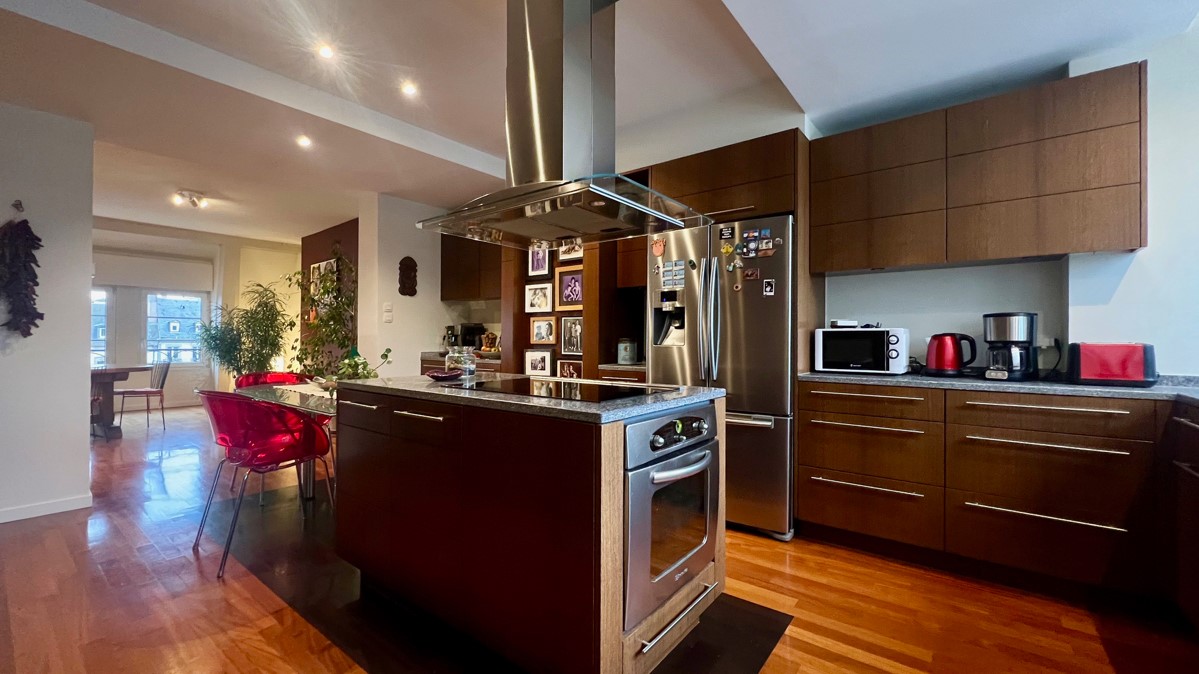
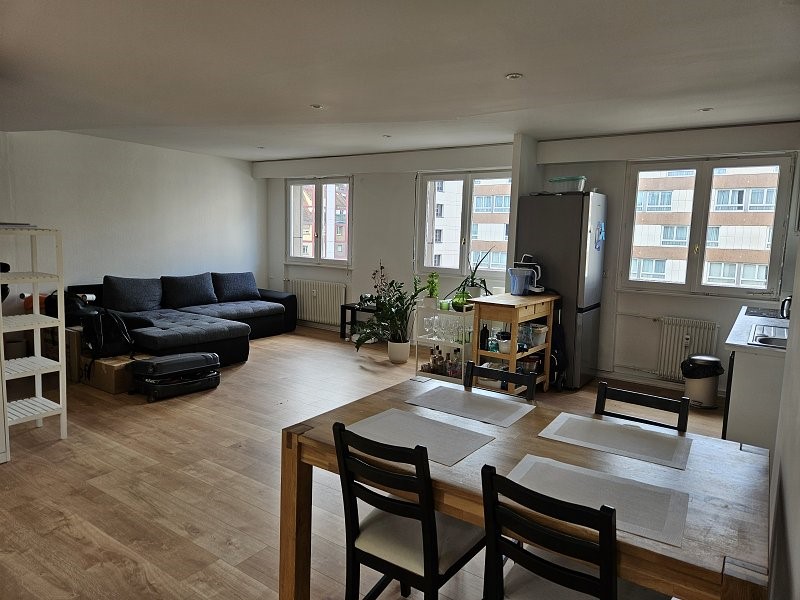
Selected stays that match the city guide, from central bases to longer-stay options.